


Image source: Getty Images
How can you turn your excess savings into a second income? Investing in the stock market is a good strategy.
I think the best way to go is to break the project down into three stages. And the first is figuring out the numbers.
Step 1: work out the numbers
Targeting a second income involves building wealth and then turning that into income. But before that, the first step is to work out what the numbers look like.
In the first phase, a 9% return is enough to turn £10,000 into £132,676 after 30 years. Is that realistic?
I think it might be. Over the last five years, the FTSE 100 has returned an average of 11.99% a year.
In the second phase, the FTSE 100 currently has an average dividend yield of 3.3%. But in this case, I think you can realistically aim higher.
In my view, a 7% yield might be sensible. And that’s enough to earn £9,287 a year in dividend income from a £132,676 portfolio.
With an idea of what you’re aiming for in hand, it’s time to start thinking about how to get there. Specifically, what shares to consider buying.
Step 2: grow the initial capital
The first phase involves turning that £10,000 into as much as possible. And that means looking for companies that can grow.
I think Halma (LSE:HLMA) is one of the FTSE 100’s finest in this regard. The firm retains the vast majority of its cash and reinvests it for growth.
Acquisitions are a big part of the company’s growth strategy. And this inevitably brings a risk of paying too much in a deal.
Halma’s returns on equity are above 15%, which is strong. Most importantly, though, they’ve consistently been above this level.
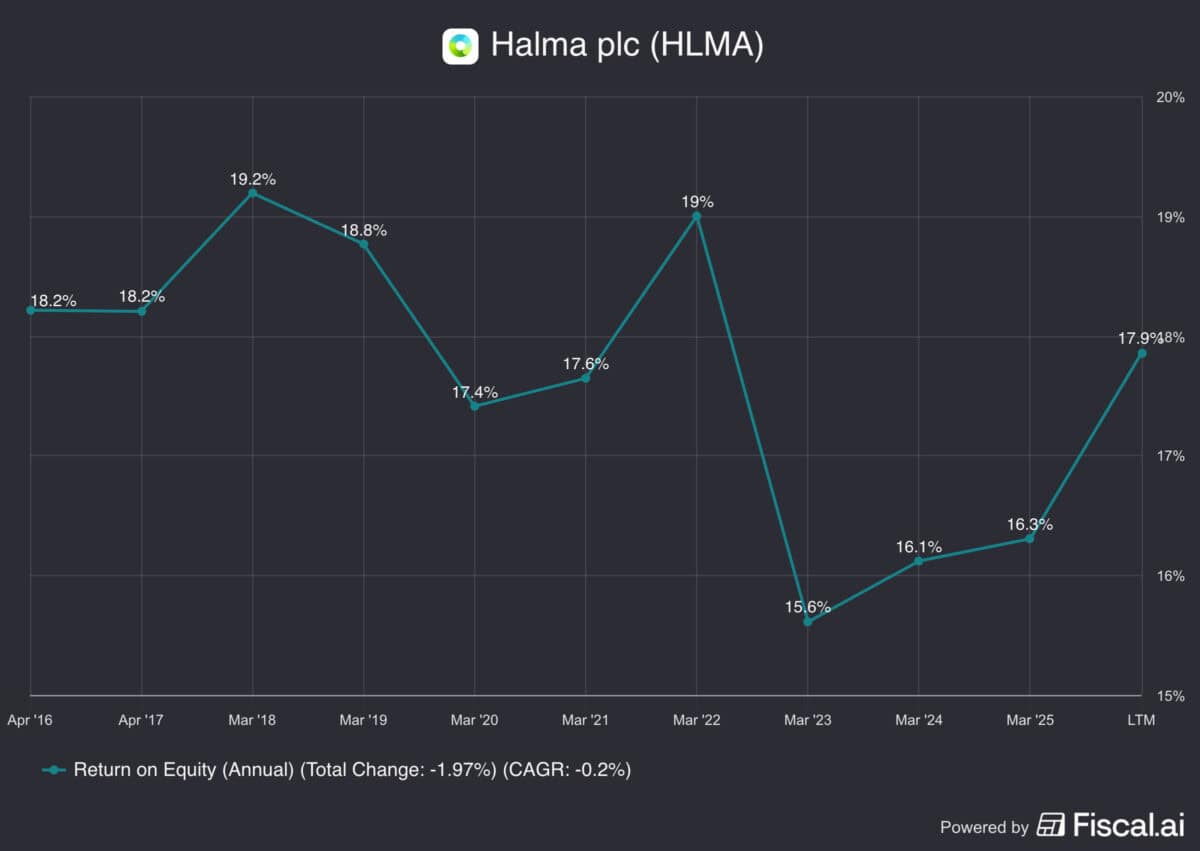
That shows the company isn’t just growing revenues at any cost. It’s doing so with smart investments that generate good returns.
It doesn’t jump out as a cheap stock. But it’s certainly the kind of firm investors trying to build wealth should be looking at.
Step 3: income investing
The second phase involves converting the accumulated capital into passive income. And there are a few ways of doing this.
High yields can be risky. But I think there are stocks with dividend yields above 7% that are likely to be worth considering 30 years from now.
In general, the real estate investment trust (REIT) sector is one that I think is interesting. Especially from a passive income perspective. These are companies that own and lease various different properties. And they distribute 90% of their rental income as dividends to shareholders.
In other words, they’re the opposite of companies like Halma. They don’t retain their cash and this limits growth opportunities.
As a result, however, they often have much higher dividend yields. And this is where I think investors targeting a 7% yield should look.
Please note that tax treatment depends on the individual circumstances of each client and may be subject to change in future. The content in this article is provided for information purposes only. It is not intended to be, neither does it constitute, any form of tax advice.
Three steps
Turning excess cash into a second income involves two phases. The first is trying to grow the initial capital as much as possible.
The second involves looking for dividend opportunities. But before either of these, the first step is to figure out what might be achievable.
This will vary as different investors have different timeframes. But with 30 years, I think turning £10,000 into a £9,287 second income is a realistic possibility.
Source link




