


Image source: Getty Images
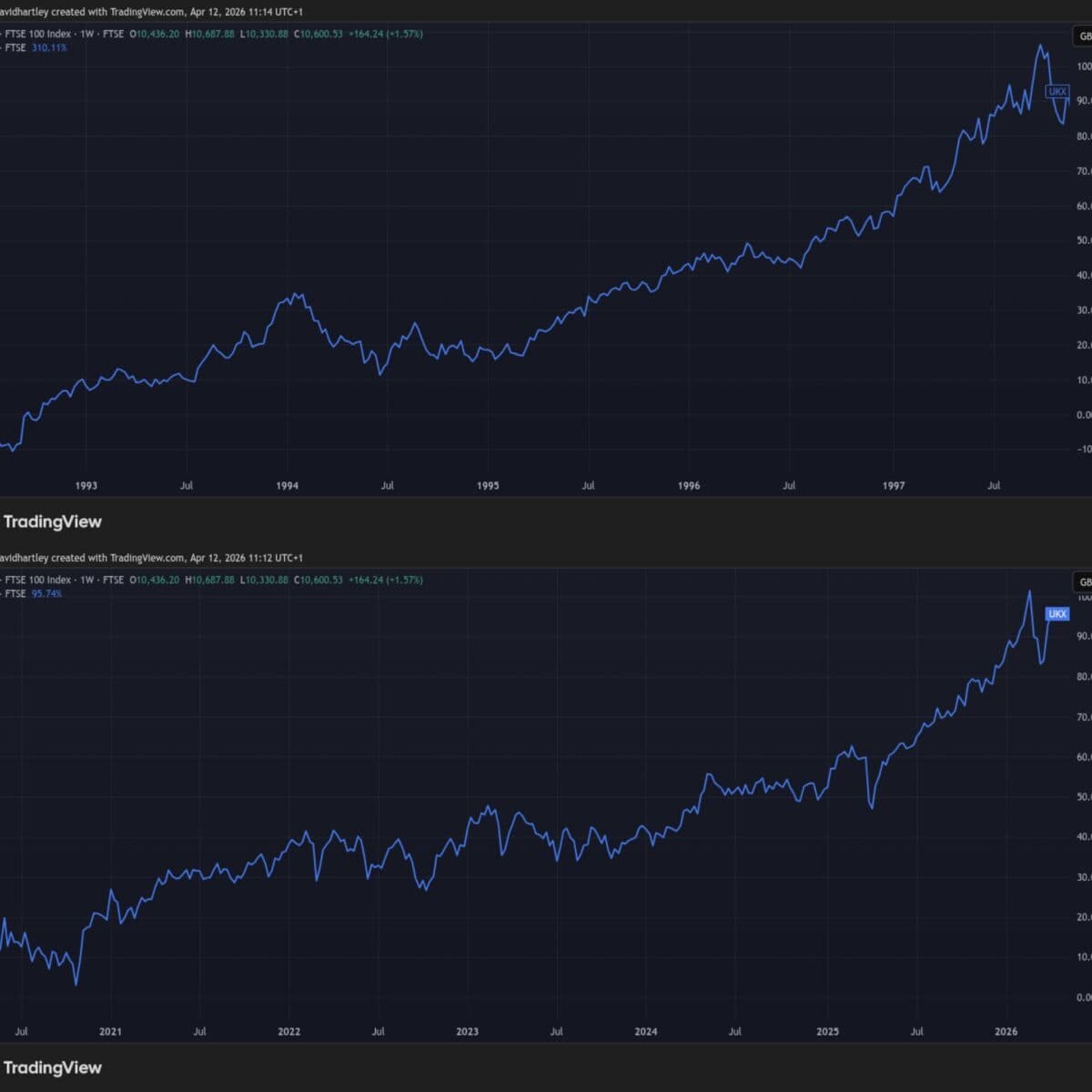
The FTSE 100 chart right now brings back memories of the late 1990s. Back then, tech hype helped it gain around 100% in the years leading up to mid-1998.
Then it took a sharp (but short-lived) dive. After recovering, it climbed to new highs but by the early 2000s, things were looking shakey.
Within two years, it had lost almost 50% of its value.
Recent activity is mirroring those days — speculative tech hype has driven the index up over 100% since the pandemic. Recently, it took a sharp dive into correction territory before making a quick recovery.
When looking at a long-term chart, the similarities are jarring. Are we on course for a repeat of the early 2000s?
Not exactly…
Just because charts correlate, doesn’t mean markets are the same. The key similarity is overhyped tech optimism — back then it was internet startups, now it’s AI.
Valuations look stretched in growth areas, and sentiment feels euphoric at times. But the differences are big. Geopolitics is messier today, with Middle East tensions and trade rows, unlike the relative calm of the 90s.
UK companies are more global and dividend-focused, not pure tech plays. And central banks are quicker to step in with rate cuts.
But while history may repeat itself, past performance is no indication of future results. Even if shares dip sharply, crashes can present opportunities for long-term investors. The trick is to be ready to pounce before the market recovers.
How UK investors can prepare
There’s never any reason to panic, even if a crash looks inevitable. These things happen, they’re normal, and in the long run, they balance out.
However, it pays to err on the side of caution. In times like these, I tend to reduce speculative positions (like AI bets) and weigh more heavily into defensive stocks (healthcare, utilities). With more stable revenues and share prices, these types of stocks can help limit losses.
Plus, it never hurts to keep some cash on the sidelines to snap up bargains.
What are UK defensive shares?
A good example to consider is National Grid (LSE: NG.), the utility giant that runs the UK’s electricity and gas networks. It’s as defensive as they come — people need power no matter what the economy does.
The shares trade around 1,340p, with a forward yield near 3.5% and full-year dividend of 47p. With a payout ratio of 80%, coverage isn’t great, but it typically aims to beat inflation.
The latest results show steady revenue, helped by regulated returns from both UK and US operations. With Bank of England rates expected to ease slightly in 2026, borrowing costs should fall, supporting profits.
Its valuation looks moderate, at about 23 times earnings, suggesting its trading at a fair price.
But still, risks exist. Debt’s skyrocketed lately as a result of grid upgrades, which could become a problem if rates stay high. Meanwhile, stricter regulations or green energy shifts could impact profits in the short-term.
The bottom line
Stock market crashes are inevitable but notoriously difficult to predict. Being prepared can reduce the chance of panicking and making rash decisions.
Defensive shares can feel like holding cash in low-growth positions but, over the long run, the risk reduction can make a big difference. And this isn’t the only one I’ve explored lately…




