

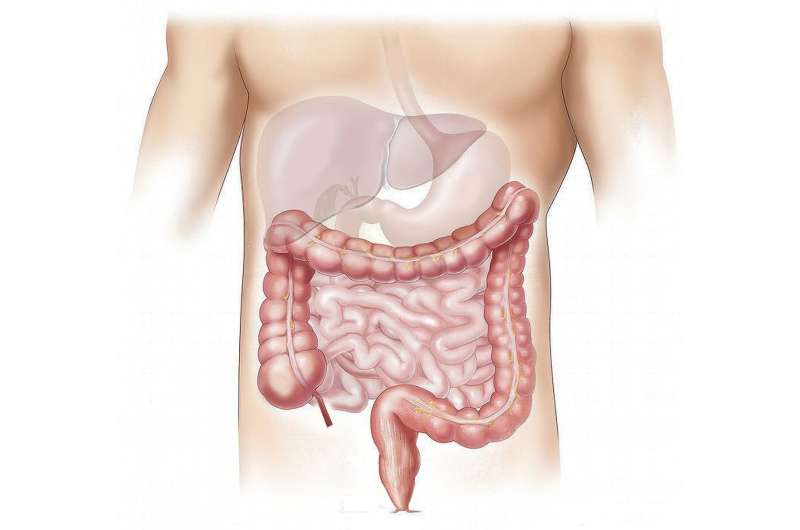
The intestines are home to trillions of microorganisms that produce substances capable of regulating all the body’s organs via the bloodstream and the gut’s nervous system. Yet, only little is known about the effects of most of the bacteria that make up our microbiome.
Now, an international team of scientists led by the University of Copenhagen has identified a common specific bacterial strain that may open the door to an entirely new class of therapeutics. The study “Polypeptides synthesized by common bacteria in the human gut improve rodent metabolism” has been published in Nature Microbiology.
This bacterium produces two proteins that partly resemble the hormone irisin. Irisin is released by muscles during physical activity and plays a role in fat metabolism.
The newly discovered signaling proteins, named RORDEP1 and RORDEP2, influence the body’s hormonal balance and affect weight, bone density, and blood sugar levels.
“We found that the number of RORDEP-producing bacteria can vary by up to 100,000 times between individuals, and that people with high levels of these bacteria tend to be leaner,” says Yong Fan, Assistant Professor at the Novo Nordisk Foundation Center for Basic Metabolic Research at the University of Copenhagen and lead author of the study.
Regulates body weight and blood sugar
In the study, the researchers describe how RORDEP-proteins increase the body’s own production of hormones such as GLP-1 and PYY, which help regulate appetite and blood sugar, as well as insulin, which is essential for maintaining stable blood sugar levels. At the same time, they suppress another hormone, GIP, which can contribute to weight gain. RORDEP-proteins also directly enhance fat burning.
“In experiments with rats and mice that received either RORDEP-producing gut bacteria or the RORDEP proteins themselves, we observed reduced weight gain and lower blood sugar levels, along with increased bone density. What’s exciting is that this is the first time we’ve mapped gut bacteria that alter our hormonal balance,” says Yong Fan.
A paradigm shift in treating chronic diseases
Research into the role of gut bacteria in human health has led the University of Copenhagen researchers to establish the biotech company GutCRINE already two years ago, with financial support from the university.
The first clinical trials are now underway. In one study, healthy participants are given live bacteria that produce RORDEPs to examine how they affect human biology. Another trial is testing the effects of the RORDEP1 protein.
“We’re now translating our basic research into human studies to explore whether RORDEP-producing bacteria or the RORDEP proteins—either in their natural or chemically modified form—can serve as the foundation for a new class of biological drugs known as pharmabiotics,” says Professor Oluf Pedersen from the University of Copenhagen, project leader and senior author of the new study.
He adds, “Looking 10 to 15 years ahead, our goal is to test the potential of RORDEP-producing bacteria for both prevention and treatment. We want to investigate whether they can function as a second-generation probiotic—used as a dietary supplement to prevent common chronic diseases—and whether RORDEP-proteins in modified forms can be developed into future medicines for cardiovascular disease, obesity, diabetes, and osteoporosis.”
The research was conducted in collaboration with scientists from the University of Copenhagen, Herlev-Gentofte Hospital, Zealand University Hospital, Novo Nordisk A/S, the Technical University of Denmark, Steno Diabetes Center, and Chongqing Medical University.
More information:
Polypeptides synthesized by common bacteria in the human gut improve rodent metabolism, Nature Microbiology (2025). DOI: 10.1038/s41564-025-02064-x
Citation:
Newly discovered gut bacteria proteins influence hormones, metabolism and bone density (2025, July 31)
retrieved 31 July 2025
from https://medicalxpress.com/news/2025-07-newly-gut-bacteria-proteins-hormones.html
This document is subject to copyright. Apart from any fair dealing for the purpose of private study or research, no
part may be reproduced without the written permission. The content is provided for information purposes only.




