

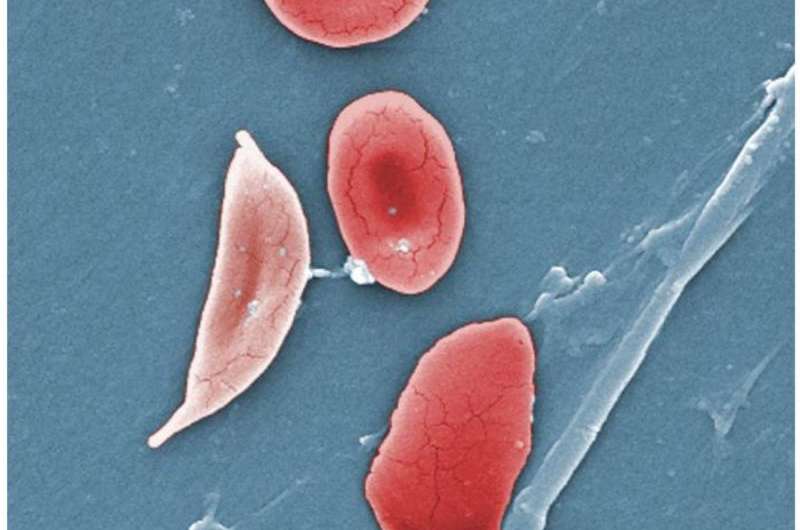
A novel intervention aimed at helping adolescents with sickle cell disease maintain hydroxyurea treatment plans shows promising results at improving their quality of life, a new Columbia University School of Nursing study finds. These findings offer insight into methods that mitigate the effects of sickle cell disease. The study, “HABIT Efficacy Trial Intervention Improves Elements of General and Disease-Specific Quality of Life in Youth with Sickle Cell Disease,” is published in Pediatric Blood & Cancer.
Sickle cell disease affects approximately 100,000 individuals in the United States; 40% of those affected are children. Adolescents with severe forms of sickle cell disease are recommended treatment with hydroxyurea daily, a disease-modifying therapy.
“When an adolescent begins treatment with hydroxyurea, there are many benefits,” says Arlene Smaldone, Ph.D., professor emerita at Columbia Nursing, who co-led the study with Nancy Green, MD, a professor and pediatric hematologist at Columbia University Irving Medical Center.
“There’s less organ damage, their pain is reduced, and they have fewer hospitalizations. Treatment may also improve their quality of life by improving their physical and mental health and their ability to keep up with friends, school, and other obligations. However, because the disease can be physically and mentally draining, adolescents often struggle to take hydroxyurea consistently.”
To explore a method that effectively increases hydroxyurea uptake and improves quality of life for adolescents with sickle cell disease, Smaldone and her colleagues developed the Hydroxyurea Adherence for Personal Best in Sickle Cell Treatment (HABIT) efficacy trial. 50 English- and Spanish-speaking adolescents ages 10–18 years with sickle cell disease participated in this 12-month trial, which was carried out at four pediatric programs within academic medical centers.
Community health workers (CHWs) made five visits to each adolescent’s home, where they reviewed educational handouts with the participant and their caregiver. They also helped identify an existing daily habit where taking hydroxyurea could fit in. This was followed by three months of daily tailored text message reminders to take hydroxyurea based on the identified habit. CHWs also supported caregivers by attending a clinical visit. At every clinical visit, each participant completed electronic surveys months 0, 4, 9 and 12 alongside their caregivers.
Findings from the study suggest the HABIT intervention improved participants’ quality of life in select ways, such as their mental health, at the nine-month mark. However, these effects were not maintained at the end of the trial. Although promising, these results indicate that further research is needed to identify additional methods for effectively inducing and sustaining behavior change.
More information:
Arlene Smaldone et al, HABIT Efficacy Trial Intervention Improves Elements of General and Disease‐Specific Quality of Life in Youth With Sickle Cell Disease, Pediatric Blood & Cancer (2025). DOI: 10.1002/pbc.31990
Citation:
New intervention may be a path to a better quality of life for adolescents with sickle cell disease (2025, August 27)
retrieved 28 August 2025
from https://medicalxpress.com/news/2025-08-intervention-path-quality-life-adolescents.html
This document is subject to copyright. Apart from any fair dealing for the purpose of private study or research, no
part may be reproduced without the written permission. The content is provided for information purposes only.




