

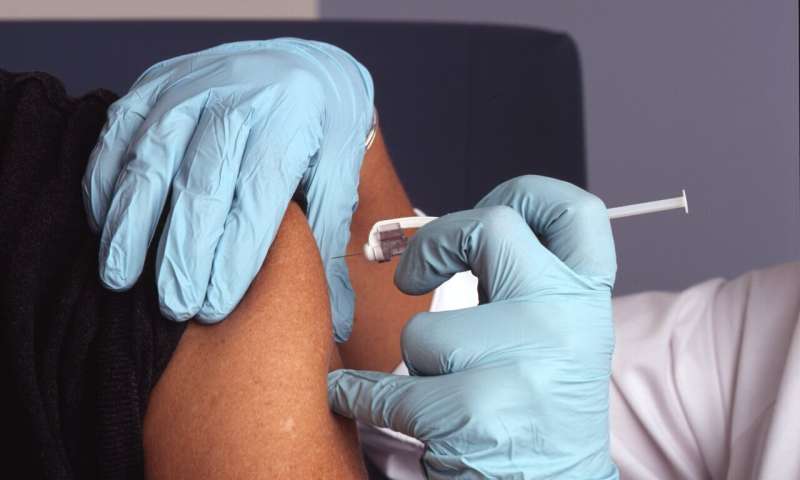
About 49% of people are unaware of one or more vaccines recommended for them. Further, 86% have not received one or more of these vaccines.
These are the findings of a University of California, Riverside-led study published in Morbidity and Mortality Weekly Reports. The study is the first national comprehensive vaccine surveillance study conducted in emergency departments, or EDs—the only health care access point for millions of underserved Americans.
“Vaccination screening is one of the most fundamental public health interventions,” said Dr. Robert Rodriguez, a professor of medicine and associate dean of clinical and population health research at the UC Riverside School of Medicine and lead author of the study. “Vaccines—along with water sanitation—have saved more lives than any other public health intervention. But nearly a third of the U.S. population lacks primary care access and rarely receives this screening.”
From April through December 2024, the investigators conducted a survey study of 3,285 non-critically ill adult patients—people visiting the ED for reasons like minor injuries or illnesses—in 10 emergency departments in eight U.S. cities.
“We found lack of vaccination was more common among African Americans, uninsured individuals, and those without a primary care provider,” Rodriguez said.
In the survey, the patients were asked age-specific questions about 6–10 recommended vaccines, including shingles, pneumococcal, RSV, tetanus, COVID-19, and influenza. For each vaccine that was recommended for them, the researchers asked if the patients had heard of it, whether they had received it, and if not, why. They also asked the patients if they would accept the vaccine if it was offered to them in the ED.
“Roughly 50% of unvaccinated participants said they would accept vaccines if offered during their ED visit,” Rodriguez said.
According to him, traditional vaccine survey methods like the National Health Interview Survey miss many groups because they rely on home visits or phone calls, which exclude people who are unhoused or unlisted.
“Our analysis suggests that if vaccine screening and delivery programs were implemented widely in EDs, the rate of adult ED patients who are fully up-to-date on their vaccines could increase from its current level of 14% to as high as 48%—more than tripling the current rate,” he said. “As the only health care access point for underserved populations, EDs can fill this fundamental public health services gap. This could be a game changer for vaccine equity.”
Rodriguez explained that vaccine screening is typically done by primary care providers, who ask patients about their vaccination history and recommend any needed vaccines.
“But about 30% of the U.S. population doesn’t have a primary care provider and relies exclusively on EDs for health care,” he said. “This group includes people without insurance, many homeless individuals, and immigrants—people who often fall through the cracks in traditional health care systems.”
To close this critical gap in health services, Rodriguez and his colleagues call for collaboration between public health officials and ED personnel to create effective programs for vaccine screening, outreach, and delivery aimed at underserved communities.
“We propose expanding vaccination efforts within EDs by implementing comprehensive screening initiatives, which could substantially boost immunization rates and help address existing health inequities,” Rodriguez said. “Because many vaccines may not be available in EDs, the vaccination delivery programs should include referrals to pharmacies, clinics, and other sites that can administer vaccines.”
Next, the researchers will explore ways to automate the vaccination screening process, making it less labor-intensive.
“We’re also exploring mobile outreach options for those who cannot make it to EDs,” Rodriguez said.
Rodriguez was joined in the study by colleagues at UCLA, UC San Francisco, Thomas Jefferson University in Pennsylvania, Wayne State University in Michigan, Rush University Medical Center in Illinois, and Duke University in North Carolina.
More information:
Robert M. Rodriguez et al, Emergency Department Survey of Vaccination Knowledge, Vaccination Coverage, and Willingness to Receive Vaccines in an Emergency Department Among Underserved Populations—Eight U.S. Cities, April–December, 2024, MMWR. Morbidity and Mortality Weekly Report (2025). DOI: 10.15585/mmwr.mm7429a1
Citation:
National study urges expanded vaccine screening in emergency departments (2025, August 7)
retrieved 8 August 2025
from https://medicalxpress.com/news/2025-08-national-urges-vaccine-screening-emergency.html
This document is subject to copyright. Apart from any fair dealing for the purpose of private study or research, no
part may be reproduced without the written permission. The content is provided for information purposes only.




