

Scientific breakthroughs often emerge from unexpected and unlikely places. The development of penicillin was an accident, Velcro was inspired by plant burrs and multiple cancer treatments have been developed from sea sponges.
Recent research has found that compounds from two different types of octopus may offer new ways to treat cancer.
Eight arms, endless possibilities
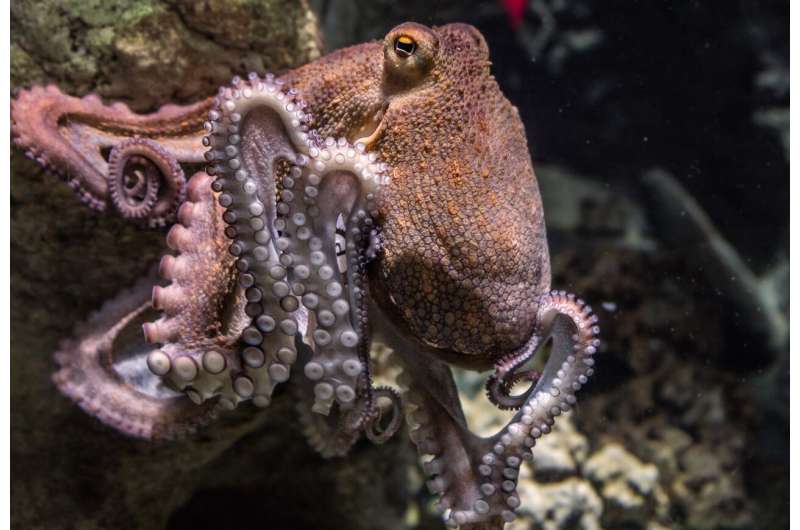
The octopuses in question are the Australian southern sand octopus and the common octopus, the same species featured in Netflix’s Oscar award-winning documentary “My Octopus Teacher.”
Compounds in their venom and ink have been observed killing harmful microbes and fighting tumors.
The sand octopus’s special compound is called octopeptide-1. The common octopus’s secret compound is called ozopromide.
Unlike other cancer treatments, the compounds in the octopus ink and venom target cancerous cells without harming healthy cells.
Reducing relapses
Dr. Maria Ikonomopoulou is Head of the Translational Venomics Group at IMDEA-Food Institute in Madrid. She specializes in venom-based drug discovery.
Maria led the research that discovered the sand octopus venom could attack melanoma.
“What we found most exciting was the specificity of octopeptide-1,” says Maria.
“It wasn’t an aggressive method of killing melanoma cells. Cancer patients often can’t finish their treatment courses because they are too aggressive. This results in high relapse rates.
“If a safer and more mild treatment option with fewer side effects was developed, more relapses could be prevented.”
The octopus venom is still being tested in animals, but early results are promising.
Where usual cancer treatments aim to stop cancerous growths by killing them, this new treatment simply limits their growth.
It is hoped this compound could be used as part of combined therapies for melanoma in the future. It could improve the target of existing treatments and make them less toxic to patients.
It is hoped the newly discovered compound in the common octopus’s ink could produce similar results.
While it has slowed the growth of cancer cells from the breast, cervix, prostate and lungs in a lab environment, it hasn’t been tested on people yet.
The most effective results were a 50% reduction in the growth of lung cancer cells.
Similarly to the sand octopus venom, the common octopus ink specifically targeted cancerous cells, with nearby normal cells remaining unaffected.
Safety first
“Unfortunately, getting to human trials is very slow progress,” says Maria.
“There is a lot of research needed to make sure what we put into our bodies is safe and effective. A lot of time, resources and funding is needed—and funding is difficult to get.”
Both compounds have been artificially created in the lab. This overcomes the challenge of relying on octopuses as a natural source.
More experiments using both compounds are required to take this research to the next step.
There is still so much to be discovered within our oceans. From cancer treatments to renewable energy, the world—and ocean—is our oyster.
Citation:
Could octopuses hold the key to curing cancer? (2025, September 2)
retrieved 2 September 2025
from https://medicalxpress.com/news/2025-09-octopuses-key-cancer.html
This document is subject to copyright. Apart from any fair dealing for the purpose of private study or research, no
part may be reproduced without the written permission. The content is provided for information purposes only.




