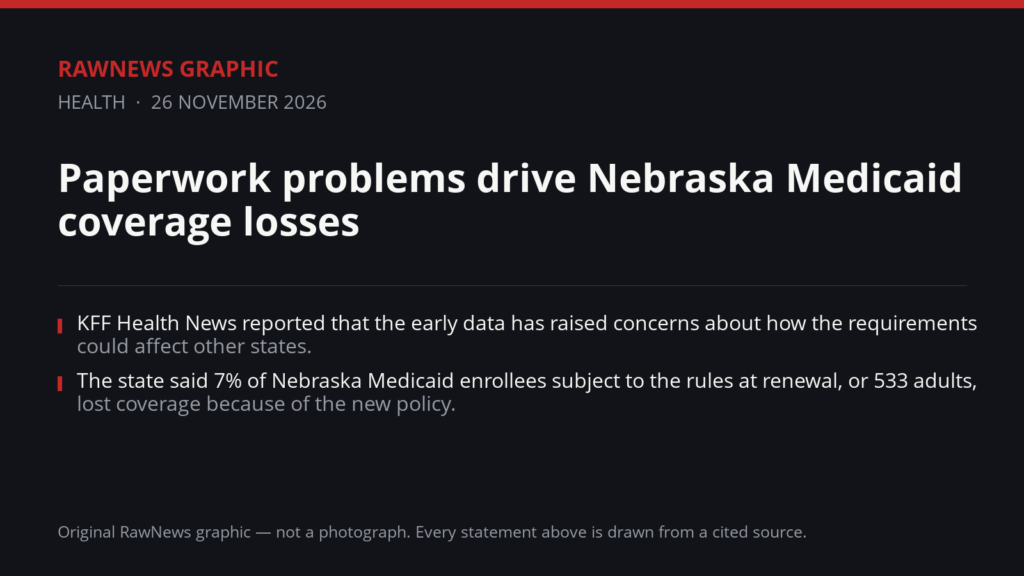
In Nebraska, 92% of existing Medicaid enrollees who lost coverage under new work rules were removed because of procedural or paperwork problems, rather than a state finding that they failed to qualify. KFF Health News reported that the early data has raised concerns about how the requirements could affect other states. The state said 7% of Nebraska Medicaid enrollees subject to the rules at renewal, or 533 adults, lost coverage because of the new policy. Another 14% of new applicants covered by the rules, representing 557 people, were denied Medicaid because of the requirements.
Nebraska Medicaid officials verified that 8 in 10 enrollees met the rules through state and federal databases, meaning those people did not have to submit additional information. The requirements apply to low-income adults who became eligible through the Affordable Care Act expansion in 43 states, and they generally require work, volunteering or school attendance for 80 hours each month. About 20 million people are expected to be subject to the requirements nationwide, including about 70,000 in Nebraska.
Nebraska began implementing the requirements on May 1, making it the first state to do so. The rules include exemptions for people caring for young children and people with disabling medical conditions, a group described in the policy as medically frail. Jeremy Brunssen, the interim Medicaid director, said the paperwork is difficult because the state must verify multiple qualifying activities and exemptions. Amy Behnke of the Health Center Association of Nebraska said the high rate of procedural denials was troubling and could mean that eligible people are losing coverage.
The report also described enrollees struggling to determine which documents to submit, reach the state agency by phone and confirm whether their coverage remained active. Chalandria James of Omaha said she spent hours at a state agency office before learning that she still had Medicaid and qualified for an exemption because she had a child under 14. Joan Alker of Georgetown University’s Center for Children and Families said the experience suggested the policy creates major barriers for low-income people rather than encouraging additional work.
The Trump administration announced on Nov. 13 that states could take more time to prepare, with a Dec. 11 deadline to decide whether to begin enforcement on Jan. 1 or delay implementation. The broader rollout was authorized under President Donald Trump’s 2025 budget law, and more than three dozen states are expected to follow Nebraska in 2027.