

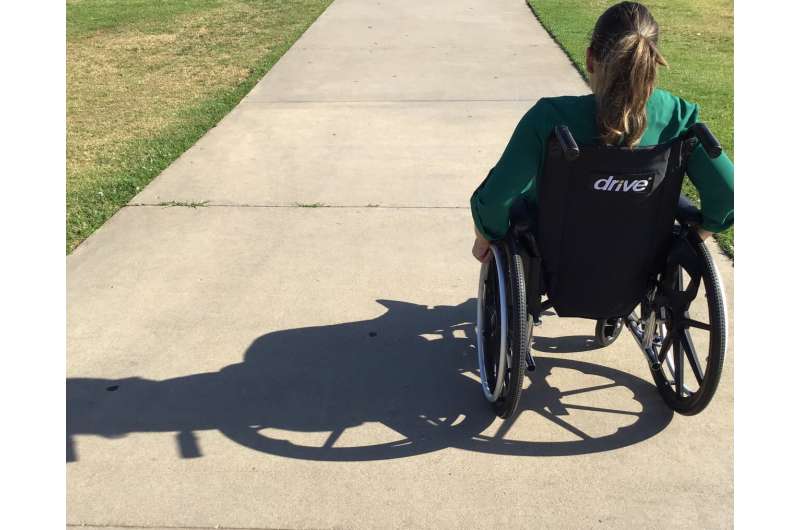
On a quiet farm in Erie County, Pennsylvania, 67-year-old Diane Zaczyk used to think nothing of hefting 50-pound sacks of chicken feed onto her shoulder. But not long ago, she found herself struggling to lift the feed bags she had carried for decades. Then her right foot started to drag. Stairs became harder.
At first, she blamed age or maybe her diabetes. Sometime around Christmas 2023, she could no longer ignore it.
Tests ruled out Lyme disease. Then myasthenia gravis, a neuromuscular disorder. Finally, came the answer that no one wanted: ALS.
Amyotrophic lateral sclerosis affects the nervous system—specifically, the nerve cells in the brain and spinal cord. The progressive and fatal disease, also commonly known as Lou Gehrig’s disease, causes loss of muscle control, according to the Mayo Clinic.
Experts do not know what causes ALS, but about 10% of cases are inherited, or familial, explained neurologist Sandeep Rana, director of Allegheny Health Network’s ALS Center, who has been treating ALS patients, including Diane Zaczyk, for nearly three decades.
Following Zaczyk’s diagnosis, she underwent genetic testing that revealed she had a very rare, inherited form of ALS—a diagnosis only about 500 people in the U.S. share.
In September, Zaczyk will receive her sixth injection of a monthly genetic treatment approved by the Food and Drug Administration in April 2023 for those with inherited ALS via a mutation of the superoxide dismutase 1, or SOD1, gene.
She is the first patient at AHN to receive it, Rana confirmed. The hospital network is the only provider currently offering the treatment in Western Pennsylvania, according to the Qalsody website.
Qalsody—its generic name is tofersen—is a gene therapy that reduces the levels of the toxic SOD1 protein that is created by the mutated gene. Research has shown that Qalsody reduces a marker of injury to the nerves in the brain, called neurofilament light chain, Rana said.
Neurofilament light chain is a protein that acts as a biomarker for neuronal damage and neurodegeneration. It is released into the cerebrospinal fluid and blood when neurons are injured, per a 2023 study published in the International Journal of Molecular Sciences.
Today, Qalsody is the only FDA-approved therapy that employs antisense oligonucleotide molecules that bind to the SOD1 mRNA, which signals the cell to destroy the mRNA before it can be translated into the harmful protein. The treatment has paved the way for similar approaches targeting other genetic forms of ALS, according to the International Alliance of ALS/MND Associations.
While the Qalsody’s Phase III clinical trial did not show a statistically significant slowdown in disease progression, it is still considered an ALS treatment breakthrough as it targets the genetic cause of the disease, according to a 2023 article by Columbia University Irving Medical Center.
When the gene that is responsible for Zaczyk’s form of ALS mutates, it doesn’t just stop working—it actually gains a harmful new function. The mutation makes the gene produce an abnormal protein, and that protein damages the body, Rana explained.
If doctors can “quiet” or turn down the activity of the gene via monthly lumbar injections of Qalsody, like Zaczyk receives, the gene stops producing that toxic protein, which can help prevent further damage, Rana said.
Another AHN patient was set to receive the treatment, but died from ALS complications before it could begin, Rana said. “By the time she reached us, the disease had already progressed quite a bit.”
Early diagnosis of ALS is essential, especially in the case of those patients like Zaczyk who have the SOD1 mutation, Rana said.
While the treatment, which is injected directly into the spinal column during a hospital visit, cannot cure or reverse the disease, researchers believe more testing will reveal that it has the ability to halt additional damage and slow down the progression of symptoms that have already begun, Rana said. “We wanted to get the word out that there is this potential treatment available.”
2025 the Pittsburgh Post-Gazette. Distributed by Tribune Content Agency, LLC.
Citation:
A Pa. woman is receiving a new treatment for a rare form of ALS (2025, September 1)
retrieved 1 September 2025
from https://medicalxpress.com/news/2025-09-pa-woman-treatment-rare-als.html
This document is subject to copyright. Apart from any fair dealing for the purpose of private study or research, no
part may be reproduced without the written permission. The content is provided for information purposes only.




