

A study published in JAMA Neurology found that patients with atrial fibrillation who were treated with Eliquis (apixaban) and carry the APOE e4 genetic allele have a higher risk of intracranial hemorrhage (bleeding within the skull) than those not treated with Eliquis.
Santiago Clocchiatti-Tuozzo, MD, MHS, a resident in the Department of Neurology, led the study.
The project was executed as part of his T32 Postdoctoral Research Fellowship in Geriatric Epidemiology and aging-related research, with mentorship provided by Guido Falcone, MD, ScD, associate professor of neurology and academic chief of the division of neurocritical care & emergency neurology, and Thomas Gill, MD, Humana Foundation Professor of Medicine (Geriatrics) and Professor of Epidemiology (Chronic Diseases) and of Investigative Medicine.
Given the established correlation between APOE e4 carriership and risk of intracranial hemorrhage in patients with atrial fibrillation who are treated with Coumadin (warfarin), the research team tested the same hypothesis with those who have been prescribed Eliquis, another, newer type of anticoagulant taken to reduce the risk of ischemic stroke—a stroke that occurs when a blood clot blocks blood flow to the brain, depriving it of oxygen and leading to brain cell death—secondary to atrial fibrillation.
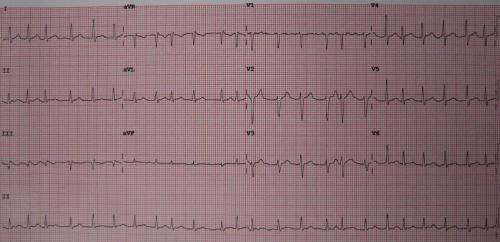
Atrial fibrillation is marked by an abnormal heart rhythm that could lead to ischemic stroke-inducing blood clots in the cavities of the heart, as well as in other blood vessels. Eliquis is commonly prescribed as a blood thinner to counteract this phenomenon.
“Although rare,” notes Clocchiatti-Tuozzo, “a potential side effect [of Eliquis] is an increased risk of bleeding with intracranial hemorrhage being one of the rarest, but most feared, complications of this drug.”
An intracranial hemorrhage is when bleeding occurs inside the skull, which can injure the brain by building up pressure and damaging its delicate tissues. The APOE e4 genotype comes into play regarding a patient’s chances of developing such catastrophic bleeding and even has clinical implications beyond stroke risk.
“Our study provides valuable insights into the pathophysiology of APOE e4 in the context of bleeding risk among anticoagulated patients with atrial fibrillation treated with Eliquis,” says Clocchiatti-Tuozzo.
“Although our analysis does not directly examine Alzheimer’s disease, by focusing on the APOE e4 (the most significant genetic risk factor for Alzheimer’s disease), we indirectly contribute to the broader understanding of this genotype’s clinical implications.”
A clear understanding of the effect of APOE e4 carriership on bleeding risk could result in more precise and personalized risk assessment methodologies, not just for those being treated for secondary stroke prevention, but also for Alzheimer’s disease.
Future studies will integrate neuroimaging and explore other potential genetic risk factors for intracranial hemorrhage and ischemic stroke in those with atrial fibrillation and who are treated with anticoagulants.
More information:
Santiago Clocchiatti-Tuozzo et al, APOE ε4 and Risk of Intracranial Hemorrhage in Patients With Atrial Fibrillation Taking Apixaban, JAMA Neurology (2025). DOI: 10.1001/jamaneurol.2025.0182
Citation:
Study ties genetics and common anticoagulant to risk of intracranial hemorrhage (2025, September 1)
retrieved 1 September 2025
from https://medicalxpress.com/news/2025-09-genetics-common-anticoagulant-intracranial-hemorrhage.html
This document is subject to copyright. Apart from any fair dealing for the purpose of private study or research, no
part may be reproduced without the written permission. The content is provided for information purposes only.




